Why WhatsApp is Dominating the Digital Marketing Landscape in 2025
Never before has the competition in the digital marketing world reached such heights. With the battle for consumer attention reaching new heights due to market saturation, there are two marketing ways which can be called giants: Email marketing and WhatsApp marketing. Though email has been the dominant method of digital marketing for decades and WhatsApp has been engaging customers the most recently.
This in-depth analysis shows the details on how WhatsApp marketing is not only competing with email marketing, but has, and continues to, outperform email marketing on all aspects fundamental to businesses in the 21st century.
The New Reality: WhatsApp’s Meteoric Rise
The available statistics form an interesting narrative. WhatsApp is no longer a messaging app. With more than 2.5 billion active users around the world, the app has established itself as the most powerful marketing platform. What WhatsApp has done is remarkable not just because of the users. Engagement numbers on the platform also defy the conventional boundaries of digital marketing.
As is the case with WhatsApp, marketing campaigns often yield to open rates of 98%. This is in stark contrast to the average industry email open rates of 20-42%. This is not an ordinary improvement. It is transformational and pushes marketers to rethink their entire communication model.
The Great Engagement Divide: Numbers Don’t Lie
WhatsApp Marketing Performance Metrics
The figures relate to WhatsApp marketing for capturing in 2025 are unrealistically fantastic:
- Open Rates: 98% average open rate, with 80% of messages opened within five minutes
- Click-Through Rates: 45-60% CTR and 10 times better than Emails
- Response Rates: 60% responders to promotional messages
- Business Adoption: Over 50 million business use WhatsApp for chatting with customers
- Conversion Impact: 68% repeat purchase rate for WhatsApp-first brands
Email Marketing Reality Check
Email marketing is still having problems with engagement, especially for such an established form of marketing:
- Open Rates: Industry average hovers around 21-42%, depending on sector
- Click-Through Rates: 2-4% for every industry
- Deliverability Issues: More spam filters and more competition in the inbox
- Response Rates: Decreasing every year with inbox fatigue
- Mobile Optimization: Changing and still having problems with mobile first movements
While email marketers view a 25% open rate as a victory, WhatsApp marketers’ frown upon anything less than 90%. This gives a completely contrasting view of email marketing versus WhatsApp marketing.
Why WhatsApp Marketing Dominates: The Strategic Advantages
Instant Intimacy and Personal Connection
WhatsApp builds trust and intimacy that email cannot with ease as it operates in the same spaces as consumers do, with family and friends. People receive messages that look like personal conversations as opposed to generic promotions, which translates to more engagement and less resistance.
Mobile-First Architecture
People often have more ease of access, user experience, and speed with WhatsApp messages than emails. This is because, in contrast to email, which is a desktop app, WhatsApp is mobile app built.
Rich Media Capabilities
Compared to traditional text-heavy emails, more engaging and interactive marketing experiences can be created with WhatsApp’s support of rich media formats like images, videos, voice messages, and documents.
Real-Time Communication
WhatsApp users expect messages to be replied to instantly which sets a deadline on decision making. Emails on the other hand can sit in inboxes for days untouched.
Case Study 1: Zara’s Fashion Revolution on WhatsApp
Challenge: As emails became less engaging and seasonal collections were not selling as well, Zara wanted to enhance direct customer relationships and generate more sales at the same time.
Integration of WhatsApp Strategy:
- Launched exclusive preview campaigns for VIP customers
- Provided personalized styling via the WhatsApp Business API
- Used WhatsApp notifications to recover abandoned cart purchases.
- Provided notifications for items with high demand and size availability.
Results That Shocked the Industry:
- 96% of customers opened the collection previews as compared to 18% similar emails
- The click-through rate was 67% and the conversion rate was shocking 43%
- 78% of customers were satisfied with WhatsApp conversation
- 145% increased repeat purchases from customers that engaged on WhatsApp
- 89% reduction of cart abandonment once customers received WhatsApp follow ups
Key Success Factor: Zara regarded WhatsApp as a personal shopping assistant, not a publishing channel, and as such, spent time on highly personal interactions that felt like ultramodern customer support.
Case Study 2: Domino’s Pizza Delivery Dominance
Challenge: Increase customer order frequency and retention as well as reduce reliance on high commission delivery apps.
Implementation of WhatsApp Strategy:
- Place orders directly via WhatsApp
- Track orders automatically and send proactive delivery notifications
- Custom deals based on order history and personal preferences
- Integrated customer care solutions for complaint triage and high urgency requests
- Loyalty program management via WhatsApp interactions
Outstanding Results:
- 94% of customers opened messages regarding promotional deals
- Direct orders (without the use of intermediary applications) increased by 56%
- Customer satisfaction scores increased by 71%
- Order frequency on average increased by 38%
- 82% of customers would rather receive updates via WhatsApp than SMS
- Annual savings of $2.3 million from the elimination of intermediary commissions
Competitive Advantage: Despite dominating the traditional ordering Domino’s created the strongest customer connections by designing an unmatchable order completion ecosystem within WhatsApp.
Case Study 3: Transformation of the Sephora Beauty Community
Challenge: Sephora sought for new ways to engage with beauty lovers, encourage them to visit Sephora stores, and expand the community around the brand.
Implementation of WhatsApp Strategy:
- Beauty consultation appointments via WhatsApp
- Real time notifications for new Sephora products
- Beauty tips and tutorials delivered through rich media messages via WhatsApp
- Virtual makeup try-on session scheduling
- Loyalty program integration with point updates and rewards
Outstanding Performance Summary:
- 97% open rate for beauty tips and product launches
- 73% interaction rate with multimedia content
- Rate of appointments for consultations – 64%
- Retained customers and subscribers on WhatsApp – 91%
- Value of transaction from customers via WhatsApp increased by 156%
- 45% additional customers acquired via WhatsApp
Key Success Factor: With real beauty expertise and tailored suggestions, Sephora positioned WhatsApp as a beauty concierge service that offers value beyond sales.
Case Study 4: BookMyShow’s Entertainment Revolution
Challenge: BookMyShow which is India’s number one entertainment ticketing platform received a lot of competitive pressure from other entertainment apps and therefore had to increase their conversion for ticket sales and decrease their cart abandonment rate.
WhatsApp Strategy Implementation:
- Automated confirmations of bookings for tickets and instant status updates
- Recommendations of events tailored to user interests
- Alerts for limited availability of tickets to popular events
- Coordination for group bookings across attendees
- Management of the ticket refund and exchange processes
Significant Achievements:
- The open rate of event notifications and ticket confirmation is 99%
- 68% of people who get last-minute ticket alerts buy tickets
- WhatsApp recovery cut down on cart abandonment by 54%
- 87% of customers prefer WhatsApp notifications to email
- 234% more repeat bookings from WhatsApp users
- 76% faster customer service resolution time
Key Success Factor: BookMyShow used WhatsApp’s group feature and real-time nature to make social booking experiences that email couldn’t compete with.
The Technical Superiority of WhatsApp Marketing
Advanced API Capabilities
Unlike others, WhatsApp Business API has sophisticated automation capabilities that outdistances email marketing capabilities. With automated messaging, templates messaging achieves deliverability and personalization. It even supports native Multimedia. Two-way communication encourages two-way conversation. Chat enhancements offer Chatbot service and help with 24 hours automation assistance with grazing interchange.
Deliverability Advantages
WhatsApp Marketing features are superb and is all email marketing’s pain points. Users are reached directly, and spam filters, sent messages, along with active users encounter, and real time confirmation with delivery.
ROI Analysis: The Bottom-Line Impact
WhatsApp Marketing ROI Metrics
The financial effects of WhatsApp marketing power are measurable and important:
- Customer Acquisition Cost: 67% lower than email marketing
- Customer Lifetime Value: 134% higher for WhatsApp-acquired customers
- Conversion Rate: 5-8x higher than email campaigns
- Retention Rate: 89% annual retention vs. 65% for email lists
- Support Cost Reduction: 45% decrease in customer service expenses
Realities of Email Marketing Cost
Though email can be seen as cheaper on a per-message basis, the true calculation of cost includes engagement costs from unopened messages, ongoing list maintenance, higher creative costs for fence-sitting designs, pricey automation, as well as the opportunity costs due to poor conversion rates.
Why WhatsApp is so Successful
Most people use WhatsApp quite differently compared to email. The former is seen as personal/instant communication, the latter is becoming more formal and is associated with the “business” world. The result is that WhatsApp is psychologically positioned to add value, because it gets attention much easier than email.
Smartphone users regard WhatsApp notifications with greater importance than email notification. The WhatsApp notification system, by virtue of its design, is able to provide more engagement due to faster response times.
Implementation Strategy: Developing the Transition
Foundation Building
Infrastructure building for successful WhatsApp marketing includes setting up the WhatsApp Cloud account for business and integrating the WhatsApp Cloud API into a third-party app, like BotSailor. Building automated workflows, configuring business systems, and compliance framework planning.
The end effect is a smooth channel of communication that simplifies business processes and enhances consumer engagement. Companies can use such tools to increase the effectiveness of their marketing campaigns and manage relationships with customers more effectively.
Content Adaptation
Moving from email to WhatsApp requires transforming the content strategy of the business. It includes building restructured message frameworks, creating workflows for mobile, templates for the message and images created, and frameworks for dynamic, personalized auto-responded messaging.
Campaign Improvements
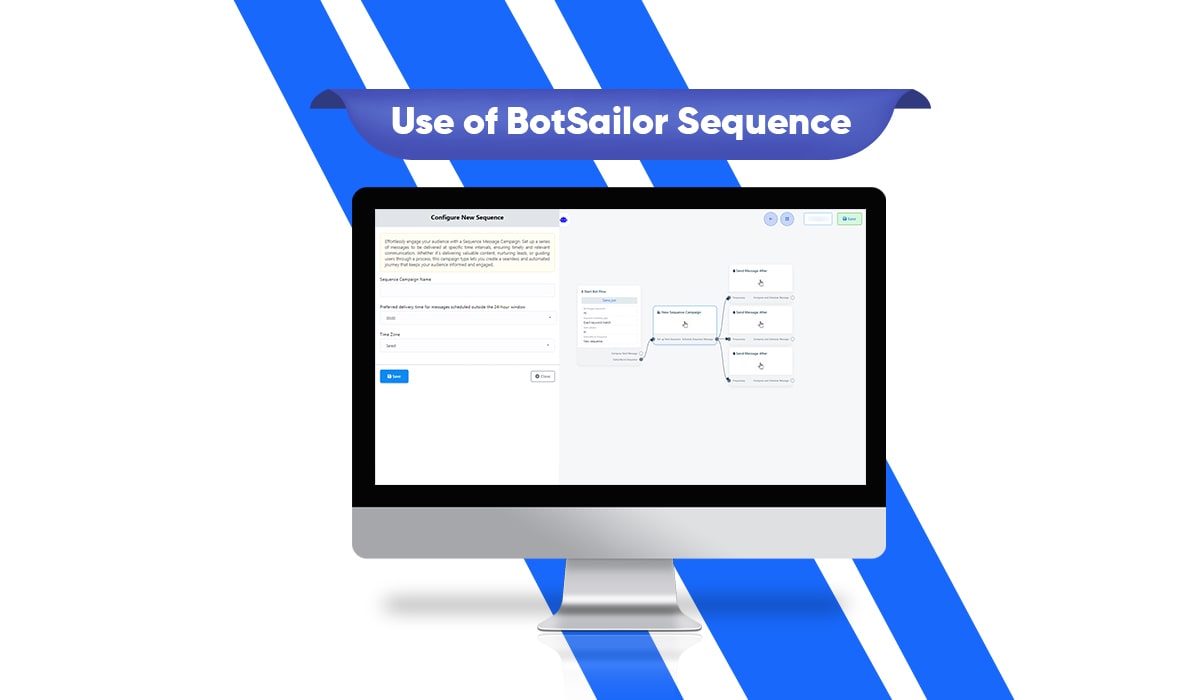
Advanced WhatsApp marketing automation excellence through intelligent chatbots, audience segmentation, sequence and drip messaging, broadcast messages, AI-generated bot replies, and so on. It’s not limited to text replies—using rich media like images, audio, video, and files can add extra appeal to consumers.
Global Market Penetration: WhatsApp’s Universal Appeal
WhatsApp has basically taken over the world, and that’s opened up some pretty amazing opportunities for marketers who want to go global. The app absolutely dominates in places like India and Brazil – these emerging markets have really embraced it. Even in Europe, where they’re notorious for their tough privacy laws, WhatsApp has managed to integrate seamlessly. And here’s the kicker – it works everywhere, across completely different cultures.
The stats are mind-blowing when you break it down by region. India has over 400 million users, and nearly everyone who gets a WhatsApp message actually engages with it – we’re talking 99% engagement rates. Brazil isn’t far behind with 98% of people opening their messages, and they’ve jumped on the commerce bandwagon faster than anyone predicted.
Europe’s interesting because all those GDPR regulations actually made WhatsApp feel more premium and trustworthy to users there. And in the Middle East? It just fits perfectly with how people naturally want to communicate – more personal, more direct. It’s like the app was made for their communication style.
The whole thing shows how WhatsApp isn’t just popular – it’s adaptable. Different regions, different cultures, but the same incredible results.
Conclusion: The Verdict is Clear
Research suggests that WhatsApp Marketing is not merely a competitor to email marketing—it is surpassing it on every key performance indicator WhatsApp has a 98% open rate and about 45% to 60% click-through rates, and higher customer satisfaction ratings than email. It is clear that WhatsApp is the future of marketing communications.
The four case studies show that regardless of industry, WhatsApp marketing has an astonishing impact. These are not simply incremental gains; they are transformative shifts in the potential of customer interaction.
Email marketing may still be relevant in certain contexts (e.g. formal communication, delivery of in-depth content) but the future will be focused on conversational marketing. For instant communication, there is no other app that combines the connectivity, engagement, and interactivity of WhatsApp. These abilities are beyond the capabilities of email.
The businesses that plan to penetrate the market in the year 2025 and beyond, the question is no longer whether to adopt WhatsApp marketing but how fast they can do so in a effective manner. Companies that are the earliest to this trend will be the ones to have the upper hand since they would have already put in place their WhatsApp marketing framework, unlike their competitors who are still mostly relying on traditional email marketing.
The fight between the two modes of marketing, email and WhatsApp Marketing, is done. WhatsApp is the clear winner and the better businesses already incorporating this WhatsApp strategy into their business plans. The question now is, will your business be the one to drive this transformation or will you be the one to be left behind?
The future of marketing is conversational, personal, and immediate. The future of marketing is WhatsApp.
